
Sourcing Sportswear from Pakistan: A Buyer’s Guide to Sialkot
In this article
Pakistan — and the city of Sialkot in particular — has a long history of making sports goods for international brands, clubs and distributors. If you are an importer, wholesaler or growing brand looking at Pakistan for sportswear, this guide explains what to expect and how to run the process safely.
Why buyers look at Sialkot
- Specialisation: the city has a dense cluster of manufacturers, sub-contractors and suppliers (fabric, trims, printing, embroidery, packaging) focused on sports and outdoor products.
- Product range: team uniforms, tracksuits, fitness wear, martial arts uniforms, gloves, hoodies, jackets and workwear are all commonly produced in the region.
- Customisation: many factories are set up for short-run, decorated orders — sublimation, screen printing, embroidery and custom labels.
- Export experience: manufacturers are used to working with buyers in Europe, North America, the Middle East and Australia, and to shipping by air and sea.
Step 1: Prepare a clear brief
Suppliers can only quote accurately if they know exactly what you want. Include:
- Product type and quantity per style, colour and size.
- Fabric (composition and weight in GSM), or a reference garment.
- Decoration: logo positions, print or embroidery method, number of colours.
- Labels, hangtags, polybags and carton marking.
- Target price, delivery date and destination.
For a full list, see our Track Suits range and the tech pack checklist in this Knowledge Hub.
Step 2: Shortlist and vet suppliers
- Ask for photos or videos of their production floor and examples of similar products they have made.
- Check how quickly and clearly they communicate — this predicts how problems will be handled later.
- Ask which processes are done in-house and which are sub-contracted.
- If your market requires it, ask for any social-compliance audits or test reports and check that they are current and relate to the factory you are dealing with.
Step 3: Sampling
Expect to pay for samples and courier costs. A typical sequence is: proto sample (fit and look) → size set (key sizes) → pre-production sample (final fabric, trims and decoration). Approve the pre-production sample in writing and keep one as the reference for bulk.
Step 4: Agree commercial terms
| Item | What to agree |
|---|---|
| Price | Per piece, per size range, and which Incoterm it is quoted on (e.g. EXW, FOB, CIF, DDP). |
| Payment | Deposit and balance terms, and whether the balance is paid before or after inspection. |
| Quality | The approved sample, measurement tolerances and the inspection standard (for example AQL). |
| Timeline | Sample date, production start and ship date. |
| Packing | Folding, polybags, pieces per carton, carton marks and labels. |
Step 5: Inspection and shipping
For larger orders, many importers book a pre-shipment inspection — either their own staff or a third-party inspection company. Sea freight from Pakistan usually leaves through Karachi; urgent or small orders often go by air or courier. Check import duties and labelling rules for your own country before the goods ship.
Red flags
- Prices far below every other quote with no explanation.
- Reluctance to make a sample or to show production.
- Requests to pay into a personal account or a different company name.
- Vague answers about fabric composition or weight.
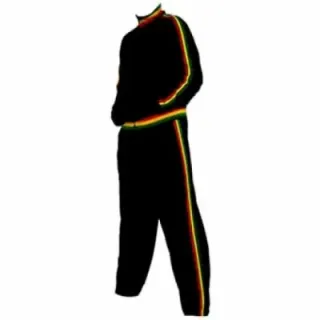 Track SuitsCustom Sublimated Tracksuit
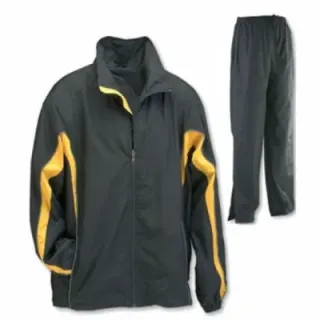 Track SuitsTeam Edition Tracksuit
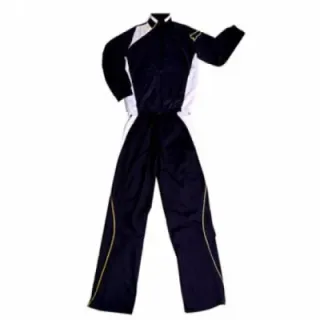 Track SuitsChampionship Tracksuit
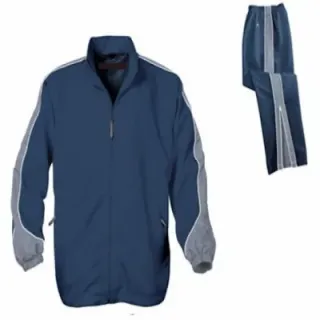 Track SuitsTraining Tracksuit
Frequently asked questions
Is Sialkot only known for sportswear?
No. Sialkot is also known for sports equipment such as balls and gloves, as well as leather goods and surgical instruments, but sportswear and teamwear are a major part of its industry.
Which Incoterm should I use when importing from Pakistan?
It depends on how much of the logistics you want to manage. FOB is common for buyers with their own freight forwarder; CIF or DDP shift more responsibility to the seller. Agree the Incoterm in writing before confirming the price.
Do I need to visit the factory?
Not always. Video calls, samples and third-party inspections allow many buyers to work remotely, but a visit is useful for large or long-term programmes.
Products related to this guide
Sourcing for import or wholesale?
Get catalogues, MOQs and a quotation for your market from our export team.
Sources & further reading
- International Chamber of Commerce — Incoterms® 2020 rules.